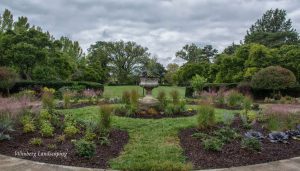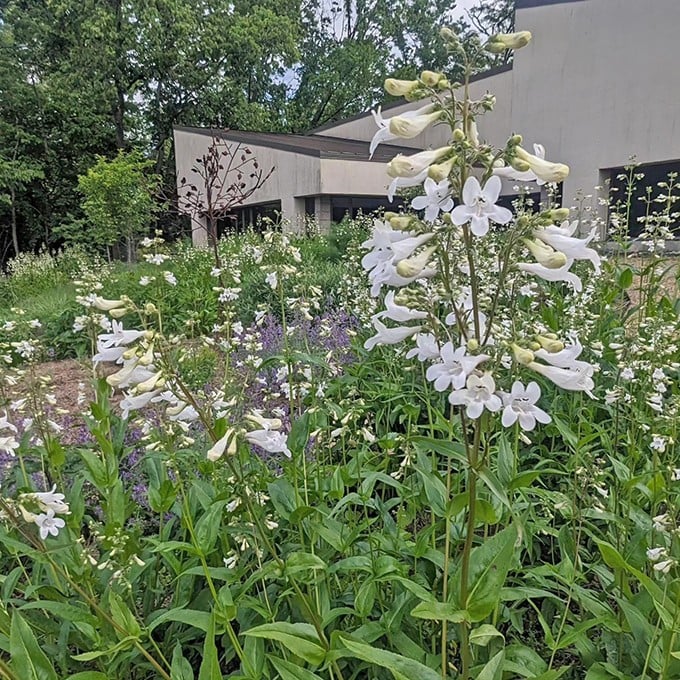
Gardens evolve. This is not a still life painting we’re creating with our gardens, but a living, growing, expanding life that will do as it pleases. Those new to gardening may have a difficult time understanding this and taking a step back and letting the garden do her thing. With clipped rows of shrubs, liriope, and a lawn nothing changes. We aren’t used to seeing our gardens put on new shows of colors, textures, and blooms throughout the seasons. A garden planted with nature can be a bit shocking in that respect.

There may be a time, when the human hand needs to take the reins and refocus the more natural gardens. This is the case for our office garden. I let things do as they pleased last year as a bit of an experiment. What I learned is that with our wonderfully rich soil, everything likes to grow and grow well. Some native plants set roots in our garden and looked fine for a month or so but were not always in keeping with what we want the garden to be long term. For example, iron weed volunteered well, but often in areas that felt crowded, and they were not in keeping with the neighboring plants. There’s nothing subtle about this plant and that doesn’t always work well in a garden plan. A lot of judicious pruning kept many iron weed volunteers in a better relationship with neighboring plants, and they still bloomed to the pollinators’ delight, but do I want to have to worry about Chelsea chopping iron weed throughout the garden? I think not.

Visitors who are already enamored with planting for nature and are more relaxed than formal with their garden’s design, rejoice in our lush, intermingled garden that dances to its own rhythm. But those that are still getting used to not having boxwoods clipped into unnatural shapes find it’s a little too much to take in, to digest, and to appreciate. So, a little re-work is in order.
This spring I’ll do some heavy editing and then plant substantial areas with the same plant. I want to bring the garden back to a more legible state for new gardeners.
If we are to entice those who have never planted with nature, the garden needs to be more approachable. It needs to be more of an example of what a garden planted for nature can look like in the home landscapes. Legibility is key. Inevitably, when giving a garden talk, a comment is made that the public gardens of famed designers are spectacular, but don’t translate to the home garden. Envisioning the gardens of the High Line in the front yard is a bit of a stretch for many. Famous public gardens are much like a couture fashion show: amazing to behold, but not representative of what most of us will find in our wardrobe.

I believe the goal of our gardens at the shop and the public spaces we adopt should be to deviate enough from expected landscape norms to entice but still be approachable enough to inspire homeowners to rethink their own landscape and gardens.